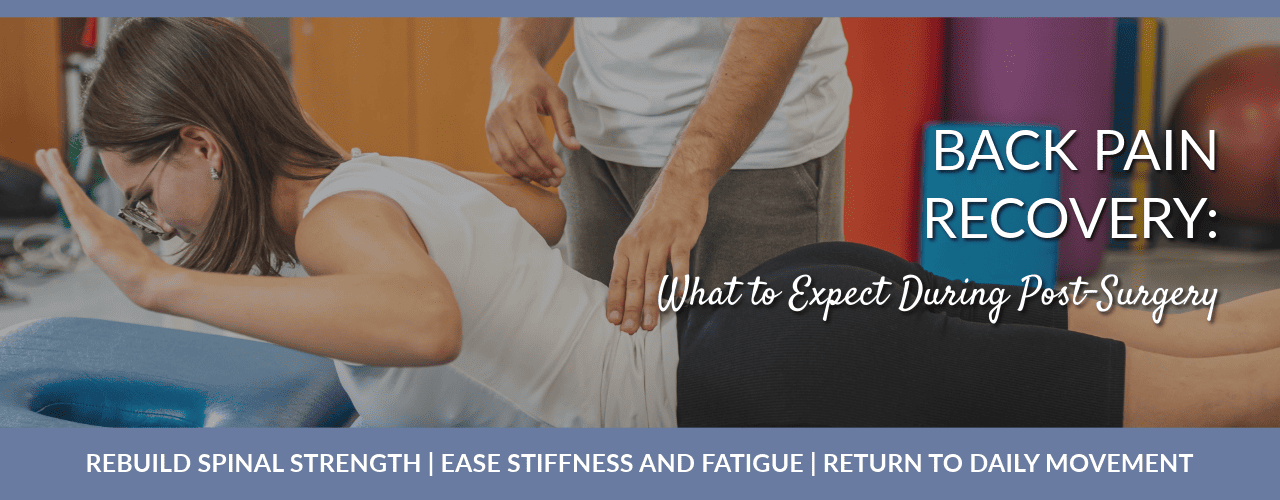
Back surgery can relieve pressure on nerves, stabilize the spine, and restore function. However, the procedure is only the beginning! You can increase your odds of a successful post-surgery recovery with guided physical therapy from the Fairfield Universal Therapy team. We can help you restore mobility, strength, and function through a progressive, structured program.
Understanding Back Pain After Surgery
It’s common to feel sore or stiff for several weeks after surgery. This discomfort isn’t a sign that the operation failed but rather that your body is undergoing its normal healing process. That pain means your tissues are repairing, your muscles are regaining strength, and inflammation from the surgery is gradually settling down.
However, it’s understandable that you may feel unsure about what’s normal and what’s not. That’s why guidance from our physical therapists is so valuable. We help you understand how your body heals, what movements are safe, and how to manage pain as you progress through post-surgery recovery.
Common Challenges After Back Surgery
Muscle Stiffness
- Limited movement before surgery can cause tight muscles that resist stretching afterward.
Fear of Movement
- Many people worry about “undoing” the surgery, so they stay on bed rest. Unfortunately, this can slow down recovery.
Fatigue
- Healing takes energy, and rebuilding endurance takes time.
Swelling and Inflammation
- These may cause discomfort but usually improve with guided activity and gentle movement.
The Phases of Post-Surgery Recovery
Physical therapy plays an essential role in rehabilitation after surgery. Early on, we can identify any barriers to healing and address them safely. As you progress, we help you regain strength and function so you can return to your favorite activities.
Here’s what you can generally expect during your post-surgery recovery timeline:
1. Early Phase (First 2–4 Weeks)
Focus: Protection and gentle motion
We’ll teach safe bed mobility, walking techniques, and light stretches to prevent stiffness. Ice may help reduce discomfort, but prolonged rest can delay healing. Controlled movement encourages circulation and reduces scar tissue buildup.
2. Middle Phase (Weeks 4–8)
Focus: Restoring mobility and strength.
We use gentle strengthening and stabilization exercises for the core, hips, and lower back. These sessions improve posture, balance, and mobility, making daily tasks easier.
3. Later Phase (After 8 Weeks)
Focus: Returning to normal activity.
We help you progress to more functional movements, such as lifting, bending, and twisting. Our goal is to restore confidence and prevent reinjury through proper body mechanics and progressive loading.
What to Expect During Rehabilitation
Our Role In Your Recovery
Your first visit includes a detailed evaluation during which we review your surgical procedure, medical history, and current limitations. This allows us to take an individualized approach to ensure your recovery is safe and efficient.
Based on your needs, your care plan may include:
- Hands-on manual therapy techniques to reduce stiffness and improve circulation.
- Non-invasive drug management strategies, such as ice, heat, or specialty modalities.
- Safe strengthening and stretching exercises tailored to your healing stage.
- Education on correct body alignment during sitting, standing, and walking.
Your Role in Recovery
Therapy sessions are just one part of healing–what you do at home matters, too. Following your therapist’s instructions, maintaining good posture, and performing your exercises regularly can facilitate your progress. Skipping sessions or resting too long can slow improvement and increase stiffness.
Staying consistent supports muscle healing and helps restore spinal stability over time.
Get Expert Help for Your Post-Surgery Rehabilitation
Back surgery is just the first step toward lasting relief. The next step is rebuilding your strength and mobility with the help of skilled professionals.
If you’re ready to move forward in your post-surgery recovery, contact Fairfield Universal Therapy today. Our physical therapists will guide you safely through every phase so you can confidently return to normal activity.